
Copper cable lugs
A cable lug, also called a cable shoe or cable terminal end, is a clamping device that connects the end of a power cable to a busbar, terminal or equipment stud, so the cable can carry current safely into the system.
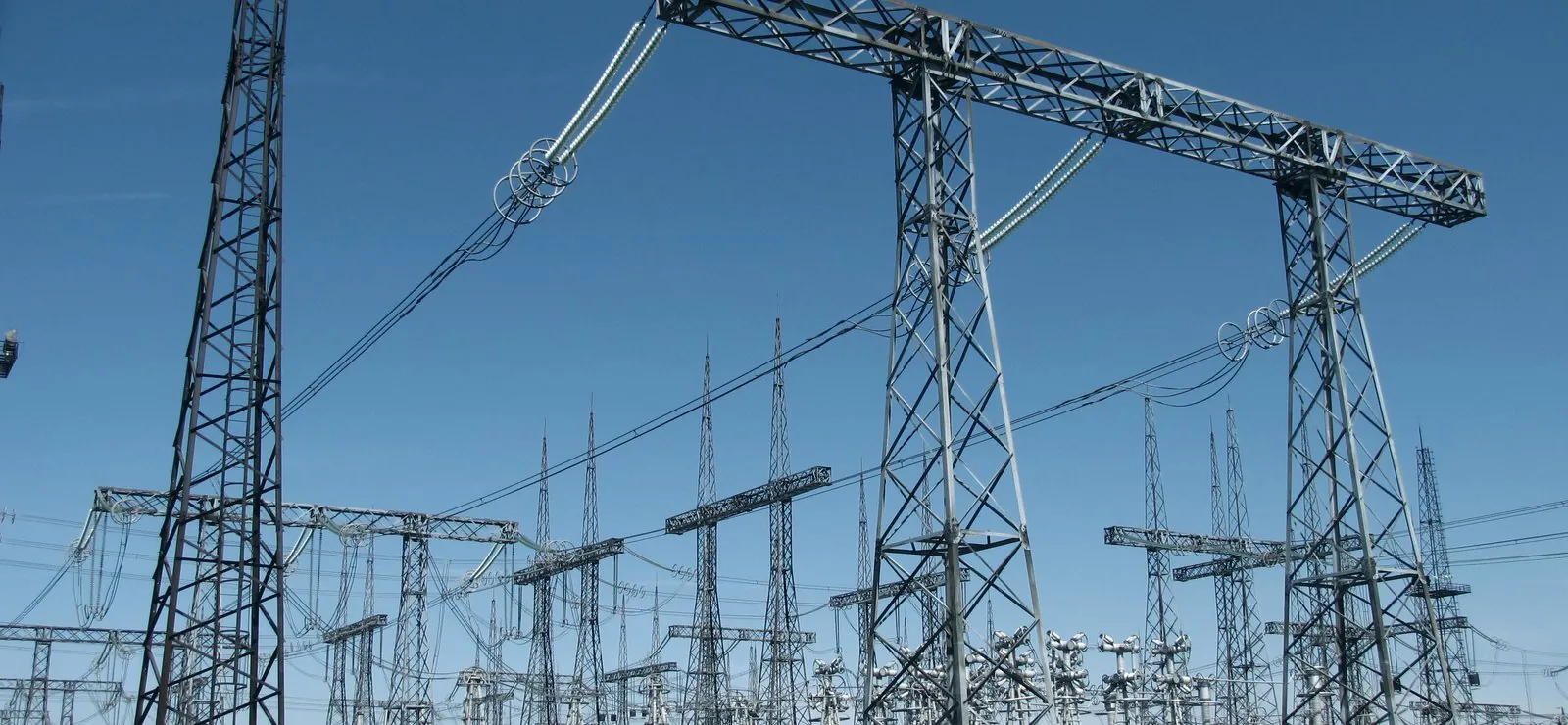
You will find cable lugs wherever a power cable meets a piece of equipment: distribution panels, junction boxes, switchgear, transformers, motors and machines. A good quality lug gives the cable a firm, secured connection point, a least resistant path which keeps the installation safe and reliable for years.
Because of the nature of copper as a material, with its high conductivity, corrosion resistance and durability, copper lugs are widely preferred over alternatives and are used across sectors such as industrial manufacturing, renewable energy, telecommunications and construction. A host of application also employ aluminium cables in place of copper. in such application aluminium cable lugs and terminals are to be used for material similarity and continuity. There is a growing segment in the industry which uses the load points such as machinery, panels, busbars, equipment of copper whereas the cables are of aluminium. Bimetallic lugs, an expert molding or fusion of copper and aluminium comes in picture here.
Why the termination matters
A small control cable may carry a few amps; a large power cable can carry thousands. The bigger the current, the more the quality of the joint at each end matters.
A loose or badly made termination adds resistance. Resistance turns into heat, and heat at a joint is one of the most common reasons electrical equipment fails, from tripping and short circuits to fire. A correctly sized and crimped cable lug keeps that joint tight and cool, even at high current.
Cable lugs, copper, aluminum or bimetallic with the help of proper crimping becomes integral part of a cable, resulting in little energy loss. And because the lug is bolted rather than fixed permanently, the cable can be taken off and refitted during maintenance, which is a big advantage over clamping bare conductors directly.
Design of a cable lug
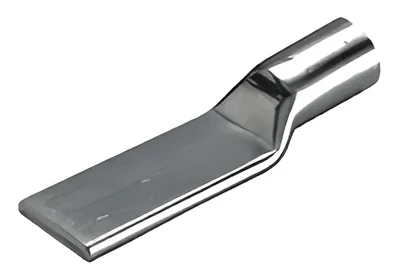
A typical cable lug has a hollow tubular structure that allows the stripped end of a cable to be inserted. The opposite end is flattened, with a stud hole, to form a connection point that is fastened with a bolt or screw to bus bars, terminal blocks or equipment connection points.
Crimping is the most common way to fix the conductor in the barrel; soldering and welding are also used. Once fixed, the lug becomes the working end of the cable and has to hold firm under load, vibration and temperature changes.
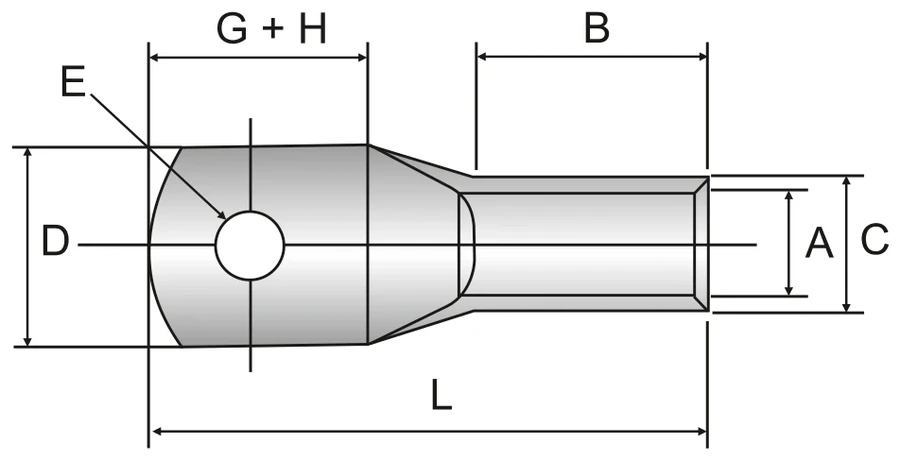
- BarrelThe tubular end that takes the stripped conductor (A, C, B).
- PalmThe flattened end that sits on the busbar or terminal (D).
- Stud holeThe hole for the fixing bolt or screw (E).
Types of cable lug
The shape of the palm decides where a lug can be used. Ring type lugs fully encircle the stud, so they cannot slip off. Fork (spade) lugs are open at one side and can be fitted by loosening the screw instead of removing it. Two hole and four hole lugs spread the connection across several bolts for busbars that see vibration or high current.
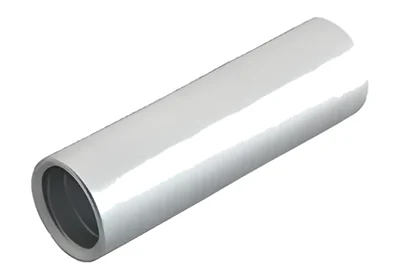
Pin type lugs turn a stranded conductor into a solid pin for terminal blocks and breakers, and inline connectors join two cables end to end. Each type is made in a series of sizes, matched to the conductor cross-section and to the stud or screw it fits.
How cable lugs are made
Lugs are produced on a power press by forging and die cutting suitable copper or aluminium tubes. Accurately designed presses, tools and dies are used in the production of good quality lugs.
- Copper/Aluminium tube of suitable size is drawn
- The tubes are annealed to remove hardness
- Tubes are cut to the designed length
- Each piece is forged and punched on a power press
- Finished lugs are tin plated to prevent oxidation
- Lugs are checked for dimensions, tensile strength and conductivity
Annealing is critical, as it allows the material to withstand the shaping and forming stages without cracking. The protective layer of tin ensures long-term conductivity, even in harsh environments.
Where cable lugs are used
Industry and manufacturing
Connecting high-capacity cables to motors, generators, transformers and switchgear.
Renewable energy
Connecting solar panels and wind turbines to storage systems or the grid with minimal power loss.
Telecommunications
Reliable connections for equipment that must maintain uninterrupted service, including outdoors.
Buildings
Connecting main power lines to distribution panels in residential and commercial construction.
Cable lugs: common questions
What is a cable lug used for?
A cable lug connects the end of a power cable to a busbar, terminal, breaker or equipment stud. The conductor is crimped into the barrel and the palm is bolted down, giving a secure, low-resistance joint that can still be undone for maintenance.
How do I choose the right cable lug size?
Match two things: the conductor cross-section (mm², or AWG and MCM for the ECT series) to the barrel, and the bolt or stud diameter to the stud hole. Then choose the palm for the space: one hole, two or four bolt holes, a narrow palm for MCB and MCCB terminals, or a long barrel where a longer crimp is needed. Every product page lists the sizes and dimensions.
Should I use copper or aluminium cable lugs?
Use copper cable lugs on copper conductors and aluminium cable lugs on aluminium conductors. Where an aluminium cable has to connect to a copper busbar or terminal, use a bimetallic (copper-aluminium) lug, which prevents galvanic corrosion at the joint.
Why are copper cable lugs tin plated?
Tin plating protects the copper from oxidation and corrosion, so the contact resistance stays low for the life of the joint, even in humid or coastal sites. Exar cable lugs are lead-free electro tin plated.
Which standards do Exar cable lugs follow?
Exar copper cable lugs are designed in accordance with BS EN 61238-1. We also make dedicated DIN 46235 and Australian standard (AUS series) ranges, and our lugs carry the CE and RoHS marks.
Do you export cable lugs?
Yes. We supply cable lugs from Ahmedabad to customers across India and export them to the Gulf countries (UAE, Saudi Arabia, Qatar, Oman, Kuwait and Bahrain), Africa and Latin America.
Exar cable lugs
Exar lugs are known for their high quality, accuracy and performance. Exar uses state-of-the-art technology and the best quality equipment to produce them. We are equipped with a modern tool room, which helps us design and develop lugs with precision for every application.
Exar has a large range of lugs to suit most applications, and our design and production methodology ensures a defect-free finish. As a cable lugs manufacturer in India, we supply customers across the country and export cable lugs to the Gulf countries, Africa, Latin America and other markets.
Range index
All 28 lug types.
Cable terminal lugs and connectors
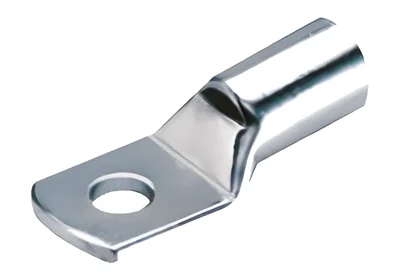 Cable Terminal Lug Regular (Heavy Duty)
2.5 to 1000 mm²
Ø4.5 to 21 mm
Copper, tin plated
EHD (45)
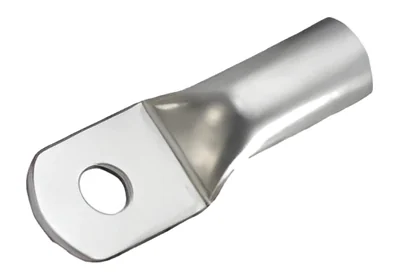 Cable Terminal Lug Medium Duty – N Series
10 to 630 mm²
Ø6.5 to 21 mm
Copper, tin plated
ECN (37)
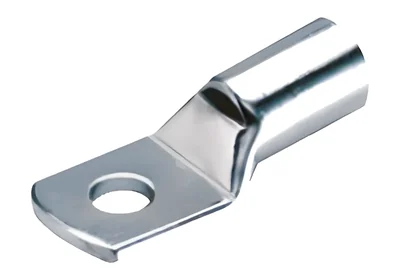 Cable Terminal Lug (Light Duty)
2.5 to 1000 mm²
Ø4.5 to 21 mm
Copper, tin plated
EMD (45)
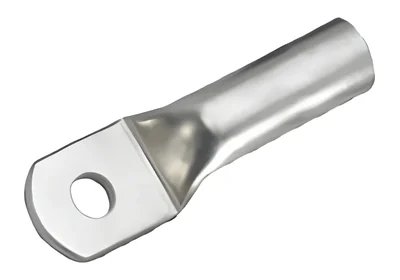 Cable Terminal Lug Long Barrel (Heavy Duty)
2.5 to 1000 mm²
Ø4.5 to 21 mm
Copper, tin plated
ELB (45)
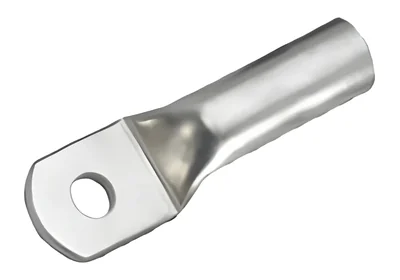 Cable Terminal Lug Long Barrel (Light Duty)
2.5 to 1000 mm²
Ø4.5 to 21 mm
Copper, tin plated
EMLB (45)
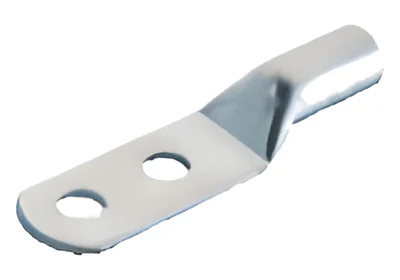 Cable Terminal Lug 2 Bolt Type (Heavy Duty)
16 to 630 mm²
Ø8.5 to 21 mm
Copper, tin plated
EHD (37)
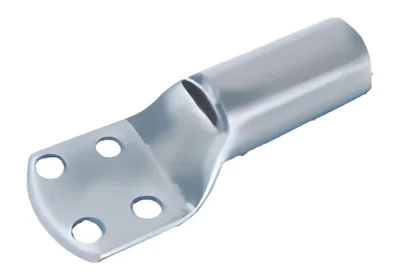 Cable Terminal Lug 4 Bolt Type (Heavy Duty)
400 to 630 mm²
Ø10.5 to 12.5 mm
Copper, tin plated
EHD (6)
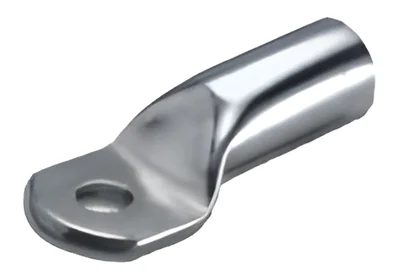 Cable Terminal Lug DIN Standard
16 to 500 mm²
M10, M13, M17
Copper, tin plated
EID (14)
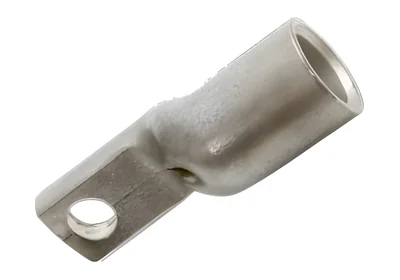 Cable Terminal Lug Narrow Palm
35 to 300 mm²
Ø6.5 to 12.5 mm
Copper, tin plated
EINP (16)
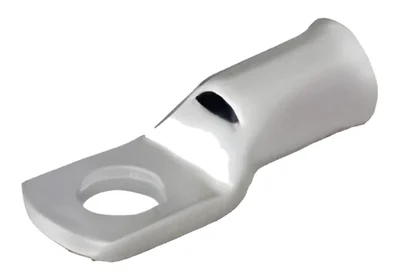 Cable Terminal Lug Flared Entry Type
10 to 240 mm²
Ø6.5 to 16.5 mm
Copper, tin plated
EBM (26)
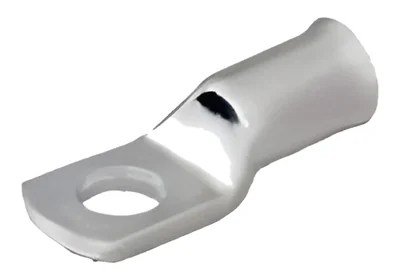 Cable Terminal Lug AUS Series
25 to 240 mm²
Ø8.5 to 16.5 mm
Copper, tin plated
AUS (18)
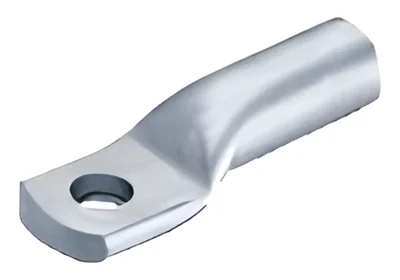 Cable Terminal Lug (Aluminium)
25 to 630 mm²
Ø8.5 to 21 mm
Aluminium
EAL (23)
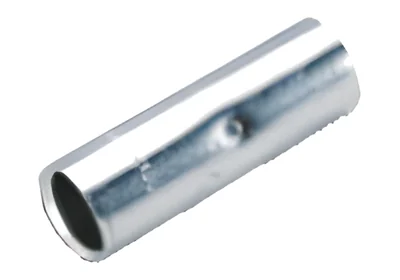 Inline Connector
2.5 to 630 mm²
–
Copper, tin plated
EIC (18)
 Inline Connector Short
2.5 to 630 mm²
–
Copper, tin plated
EICS (18)
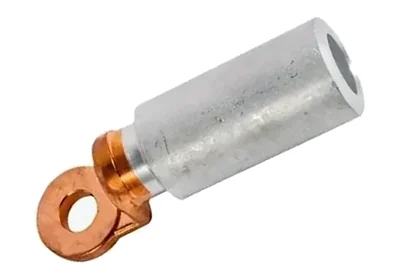 Bimetallic Cable Lug
25 to 400 mm²
Ø8.5 to 13 mm
Aluminium and copper
EIBML (15)
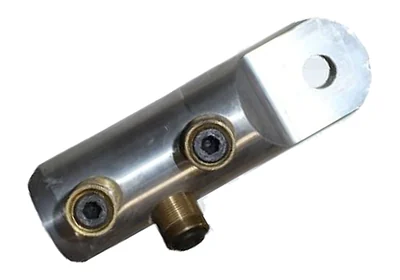 Mechanical Aluminium Shear Bolt Connector
10 to 800 mm²
M12, M16
Aluminium, tin plated
EIML (9)
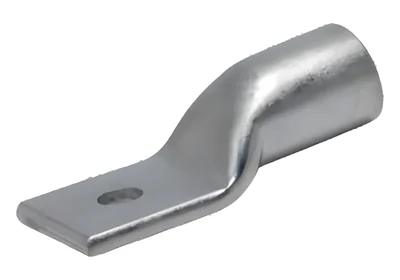 Cable Terminal Lug ECT Series – 1 Bolt Hole
8 AWG to 1250 MCM
3/8, 1/2, 1/1.75 in
Copper, tin plated
ECT (39)
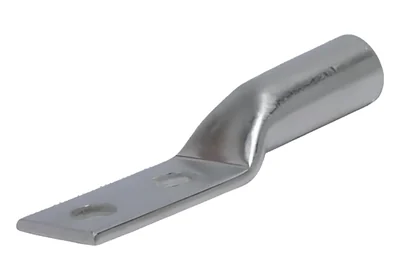 Cable Terminal Lug ECT Series – 2 Bolt Hole
8 AWG to 1250 MCM
3/8, 1/2, 1/1.75 in
Copper, tin plated
ECT (39)
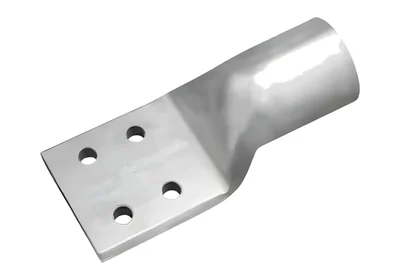 Cable Terminal Lug ECT Series – 4 Bolt Hole
350 to 1250 MCM
1/1.75 in
Copper, tin plated
ECT (6)
Cable terminal ends
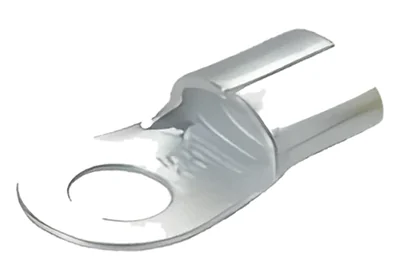 Cable Terminal Ends – Ring Type
1.5 to 150 mm²
Ø3.2 to 20.3 mm
Copper, tin plated
ER (54)
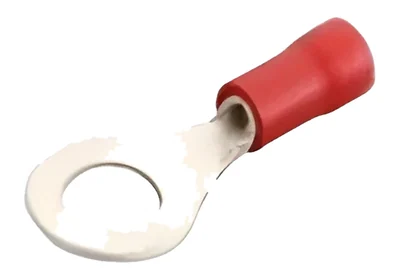 Cable Terminal Ends – Ring Type Insulated
1.5 to 4-6 mm²
–
Copper, tin plated
ERI (20)
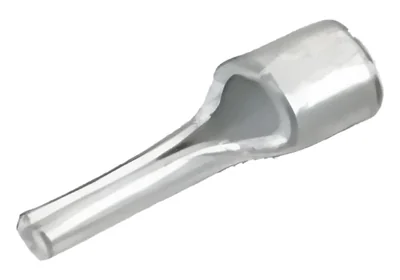 Cable Terminal Ends – Pin Type
1.5 to 70 mm²
–
Copper, tin plated
EP (12)
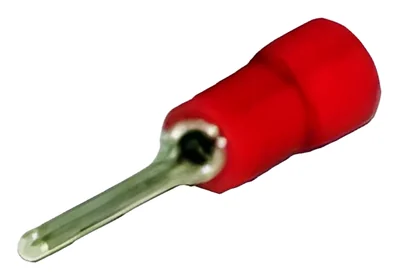 Cable Terminal Ends – Pin Type Insulated
1.5 to 16 mm²
–
Copper, tin plated
EPI (8)
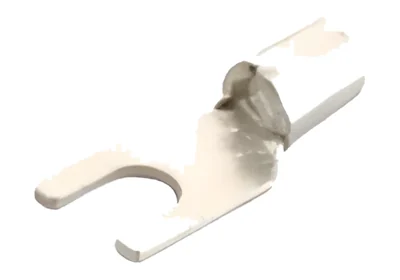 Cable Terminal Ends – Fork Type
1.5 to 16 mm²
Ø3 to 8.2 mm
Copper, tin plated
EF (11)